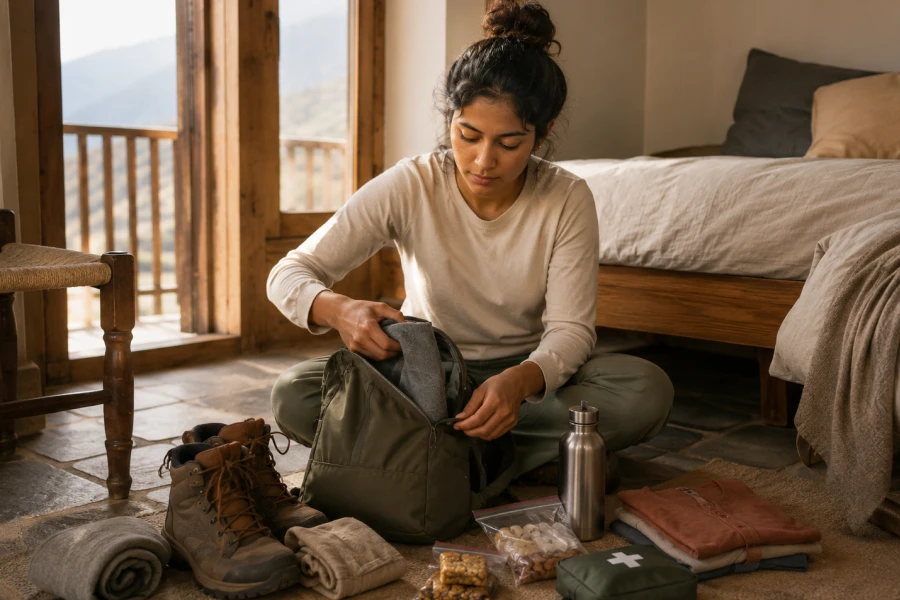
A good outdoor kit is less about owning everything than knowing what already works. A cheap hiking gear strategy begins by separating needs from attractive extras. Start with the items you already trust on long walks. A comfortable layer or sturdy bottle may matter more than a new gadget. Consider the terrain, weather, and distance you truly plan to cover. That context makes purchases easier to judge. It also stops one ambitious outing from defining your entire closet. The goal is reliable comfort, not an impressive gear photo. Small, deliberate choices create a kit that feels personal. Over time, that kit can grow without draining the adventure budget. It also makes a limited budget feel like a creative constraint rather than a disadvantage.
Empty your pack and make three piles before shopping for anything new. Keep items that work, repair items with potential, and question the rest. Notice which tools solve the same problem twice. A duplicate often reveals an easy place to reduce weight. Start with shelter, water, warmth, food, and navigation before accessories. Review secondhand hiking gear with a clear list in hand. Used equipment is most useful when you know the exact feature you need. Check seams, zippers, straps, and fit before committing. A short gear audit turns shopping into research rather than impulse. It also makes your next packing session far more efficient. The right system leaves room for curiosity without forcing you to replace usable belongings.
Cost matters, but the lowest price is not always the smallest expense. A poorly fitting shoe can end an outing early and waste more than money. A simple, durable layer can serve for years across seasons. Prioritize comfort against your skin and safety against changing conditions. Choose neutral pieces that work for hiking and ordinary days. That overlap stretches value beyond one trailhead. Borrow specialty gear when a trip requires something unusual. Rent items before buying if you are still learning your preferences. Do not buy a future identity you have not tested yet. Buy support for the outings you are actually taking now. A few disciplined habits can often deliver more comfort than another expensive purchase.
A small system for care can extend the life of nearly every useful item. Dry boots thoroughly after wet trails and brush dirt from seams. Air out layers before washing them with the right product. Store batteries and filters where you can find them quickly. Keep a tiny repair pouch with tape, thread, and spare clips. Add lightweight packing system ideas only after the basics feel familiar. Lighter packing should reduce effort, not create a fragile setup. Mark items that break often or never leave the bag. Those notes tell you where upgrades would genuinely help. Maintenance turns ordinary equipment into a dependable travel companion. Reliable basics make changing weather less intimidating and leave more attention for the trail itself.
Layering is often the most economical solution to unpredictable outdoor weather. A simple base layer, warm midlayer, and shell can cover many forecasts. Each piece should work alongside the others without awkward gaps. This approach reduces the need for specialized single-purpose clothing. Choose fabrics that dry quickly and feel comfortable after movement. Keep extra warmth accessible instead of buried at the bottom. Test the system on short walks before a longer route. Adjust one piece at a time when something fails. Gradual changes reveal the real cause of discomfort. A thoughtful layering system makes affordability feel like freedom, not compromise. That confidence is often the most valuable return on a carefully chosen piece of equipment.
Your kit should change because experience teaches you something, not because trends appear. After each trip, write down one item you appreciated. Then write down one item that felt unnecessary or inadequate. Look for recurring issues before spending on replacements. A budget outdoor travel and emergency contact plan can help keep priorities grounded. Safety basics deserve dependable choices even when extras wait. Give yourself permission to upgrade slowly as your routes expand. The result will be more useful than a rushed collection of expensive gear. Eventually, every item will have a reason to be there. That clarity is one of the best forms of value.
The best outdoor kit is the one you understand without needing a long explanation. Let every purchase solve a clear problem from your real outings. Keep receipts or notes for items that still need testing. Repair what can be repaired before replacing it. Pass along equipment that no longer serves your routes. This creates a more intentional relationship with the things you carry. You will spend less on duplicate solutions and more on experiences. A calm, functional pack makes every departure easier. It also helps the outdoors feel accessible at any budget. Good value is built slowly, one useful choice at a time.

Leave a comment