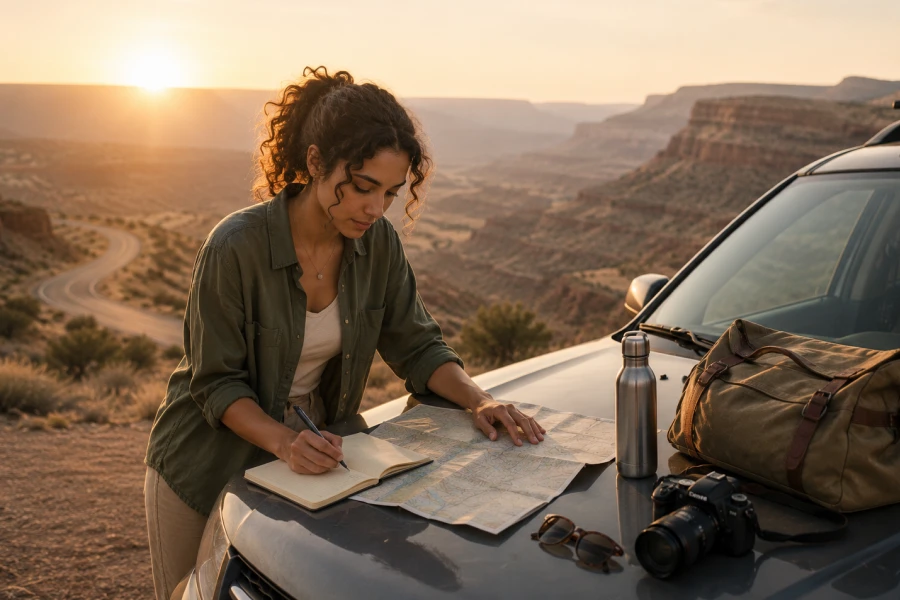
A memorable drive does not require a packed route or a dramatic destination. A first road trip itinerary works best when it gives the journey a clear mood. Choose one reason to leave, such as a lake, a trail, a market, or a wide horizon. That simple intention keeps every stop connected. It also prevents the first trip from becoming a frantic list. Begin with a distance you can cover comfortably in daylight. Then leave room for slow breakfasts, fuel stops, and unexpected views. A good plan offers direction without closing the day. You are learning how you like to travel, not proving how much ground you can cover. The road feels more inviting when the schedule has breathing room. That openness lets you enjoy the route itself instead of treating it as empty space between stops.
Start with a single destination that genuinely appeals to you. It can be a small town, a coastline, a desert overlook, or a quiet state park. Build the route from that place outward rather than collecting attractions first. Check drive times at realistic hours, not only under ideal conditions. Leave an arrival margin that protects the final part of the day. A scenic route mapping approach can reveal roads that add beauty without adding stress. Keep the first day shorter than your optimistic estimate. That decision makes the trip feel more spacious from the beginning. It also gives you confidence to adjust later. A clear reason for leaving becomes your anchor when choices multiply. A well-paced day gives every pause an opportunity to become part of the trip.
Each day needs a rhythm that matches your energy, not a rigid sequence of tasks. Decide when you prefer to start driving and when you want to be done. Place the longest stretch where your attention will be strongest. Use midday for meals, walks, or a simple attraction. Let late afternoon belong to arrival, settling in, and a little exploration. Keep one short break available between major stops. That pause may become a viewpoint, a nap, or a useful change of plan. A relaxed daily shape makes the itinerary easier to follow. It also prevents the beautiful parts of the route from becoming a blur. Travel feels more personal when your schedule respects your natural pace. This perspective keeps decisions grounded in what will make the day feel genuinely worthwhile.
A sequence of fewer places often creates a stronger first trip. Choose stops that sit naturally along the same corridor. Avoid crossing back and forth simply to collect famous names. One extra night in a good place can be better than another long drive. Notice which towns offer food, fuel, and a safe place to rest. Use a travel journaling prompts habit to remember why each stop mattered. A few sentences can turn a roadside meal or overlook into part of the story. Keep the plan practical enough that you can explain tomorrow in a minute. Simple geography supports a calmer mind. That calm makes room for curiosity.
Detours can be the heart of a road trip when they fit the day. Leave time and a small amount of money for a spontaneous decision. A local sign, recommendation, or stretch of good weather may change your route. The key is choosing changes that do not compromise rest or safety. Use mindful solo travel to ask what you actually want from the moment. Maybe you need a quiet view more than another attraction. Maybe you need to stop early and enjoy the town you already reached. Flexibility is not failure when it serves the experience. It is often evidence that the plan has enough space to work. Your itinerary should support discovery, not compete with it.
After the trip, turn the route into something you can learn from. Mark the roads you loved and the places you would skip. Note where the timing felt smooth and where it felt too ambitious. Keep receipts or photos only when they help you remember a useful detail. The next itinerary will come together more easily because of this evidence. You will know whether you prefer early starts, scenic loops, or longer stays. That knowledge is more valuable than copying someone else’s perfect plan. A first road trip is successful when it teaches you your own rhythm. The final destination matters, but the confidence you bring home matters more. That kind of openness is what makes a carefully planned route feel alive.
Your route can become a living record of what makes travel meaningful to you. Keep the place names, turns, and pauses that felt unexpectedly right. Let those details shape future weekends and longer adventures. The next drive does not need to repeat this one. It only needs to build on what you learned. A flexible plan leaves room for your preferences to emerge. That is especially valuable when you are just beginning. With every journey, your itineraries will become more personal. They will reflect your own pace instead of someone else’s formula. That is the most useful map you can bring home.

Leave a comment